
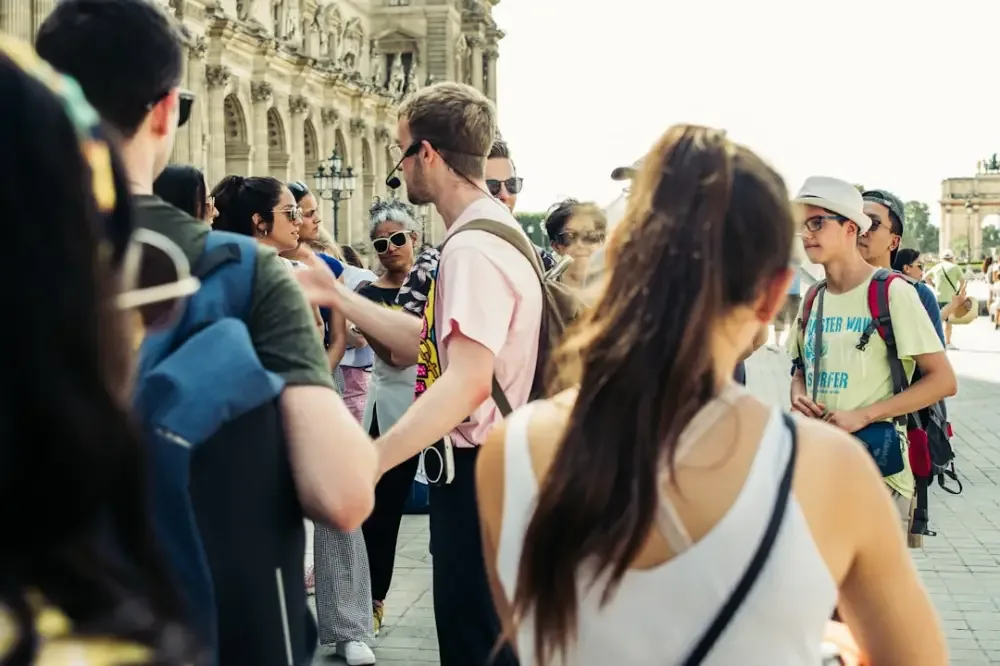
The Shift from Monuments to Movement
For decades, the architectural tour was a predictable affair. It was a sequence of stops in front of 'starchitect-designed' landmarks, a checklist of dates, styles, and names delivered through a megaphone or a crackling headset. But a quiet revolution is happening on the pavement. In cities like Barcelona, Berlin, and New York, the architectural walking tour has evolved from a lecture on facades into a deep dive into the sociology of the street itself. We are no longer just looking at buildings; we are finally learning how to see the street as a living, breathing organism.
This shift reflects a broader cultural change in how we consume urban space. In an era of 'slow travel' and a heightened awareness of urban planning, the modern pedestrian wants to understand the interstitial spaces—the gaps between the monuments where life actually happens. These new tours are less about the 'what' and much more about the 'how' and 'why' of our daily urban experience.
Beyond the Facade: The Contextual Revolution
The traditional architectural narrative often treated buildings as isolated objects, floating in a vacuum of aesthetic merit. Today’s editorial-style walking tours reject this isolation. They treat the street as a connective tissue, analyzing how a building’s shadow affects a local microclimate or how the placement of a doorway influences the flow of foot traffic. This contextual approach is changing the way residents and tourists alike perceive their environment.
When a guide points out the adaptive reuse of an old industrial warehouse not just as a 'cool loft' but as a pivot point for a neighborhood’s gentrification, the tour becomes a lesson in urban evolution. This is where architectural walking tours are finally finding their footing: by bridging the gap between high-design theory and the grit of the sidewalk. They are teaching us that the most important part of a building might not be its roofline, but how it meets the pavement.
The Democratization of Urban Design Literacy
Perhaps the most significant impact of this trend is the democratization of design literacy. By breaking down the complex language of urbanism into a walkable narrative, these tours empower citizens to participate in the conversation about their city’s future. When you understand why a street feels welcoming—perhaps due to 'active frontages' or the rhythm of the trees—you become a more informed advocate for your own neighborhood.
- The Psychology of Pavement: Modern tours often examine how different materials underfoot signal changes in speed, safety, and social hierarchy within the street.
- The Evolution of the Storefront: Analyzing how retail design has shifted from closed, defensive structures to transparent, inviting spaces that blur the line between private and public.
- The Third Space: A focus on plazas, benches, and 'liminal' spaces that facilitate social interaction outside of the home or workplace.
- Sustainability and Material History: Tracing the origins of stone, brick, and timber to understand the ecological footprint of the urban fabric.
The Walking Tour as a Form of Urban Activism
There is an inherent politics to walking. In many modern cities, the street has been historically surrendered to the automobile. By reclaiming the street as a space for education and observation, architectural walking tours act as a soft form of activism. They prioritize the pedestrian perspective, highlighting the successes and failures of urban planning in real-time. As we walk, we see the cracks in the pavement, the lack of shade, and the brilliance of a well-placed public bench.
This 'ground-level' journalism allows participants to critique the city. It moves the conversation away from the glossy renderings of developers and into the lived reality of the pedestrian. It is an observational practice that turns every participant into a temporary urbanist, analyzing the patterns of human behavior that define the 'street culture' we so often take for granted.
The Slow Movement of Discovery
In a world of digital maps and instant transit, the act of walking a specific route with an expert is an exercise in intentionality. It forces a slower temporal relationship with the city. This 'slow discovery' allows for the observation of patterns that are invisible from a car or a bus. We notice the way light hits a specific limestone facade at 4:00 PM, or how a particular corner creates a natural wind tunnel. These are the sensory details that make a city feel like home, and they are the core focus of the new architectural narrative.
By shifting the lens from the 'greatest hits' of architecture to the 'hidden tracks' of the street, these tours are fostering a deeper, more empathetic connection to our urban centers. They remind us that the street is not just a path from point A to point B; it is the most important room in the city, an open-air gallery where the art is the life of the people within it.
Conclusion: A New Way of Seeing
The transformation of architectural walking tours is ultimately a transformation of our own awareness. We are moving away from being passive observers of 'great buildings' and becoming active participants in the 'great street.' As we continue to reimagine our urban spaces for expression, sustainability, and community, the lessons learned on these walks become the blueprints for our future cities. The street is finally being seen for what it is: the ultimate canvas of human experience, constantly being redrawn by those who walk it.