
Articles in this Exploring neighborhoods guide
In 2026, the way we experience urban environments has undergone a fundamental transformation. For the modern traveler and the curious resident alike, the city is no longer a collection of static monuments to be checked off a list. Instead, it is a living, breathing organism defined by the movement between buildings, the scent of the street, and the voices that echo through its plazas. This guide serves as the central hub for the Barcelona Street Project, a collective effort to document and understand the shifting dynamics of our neighborhoods. We move beyond the glossy brochures and the predictable 'starchitect' landmarks to explore the sociology of the pavement.
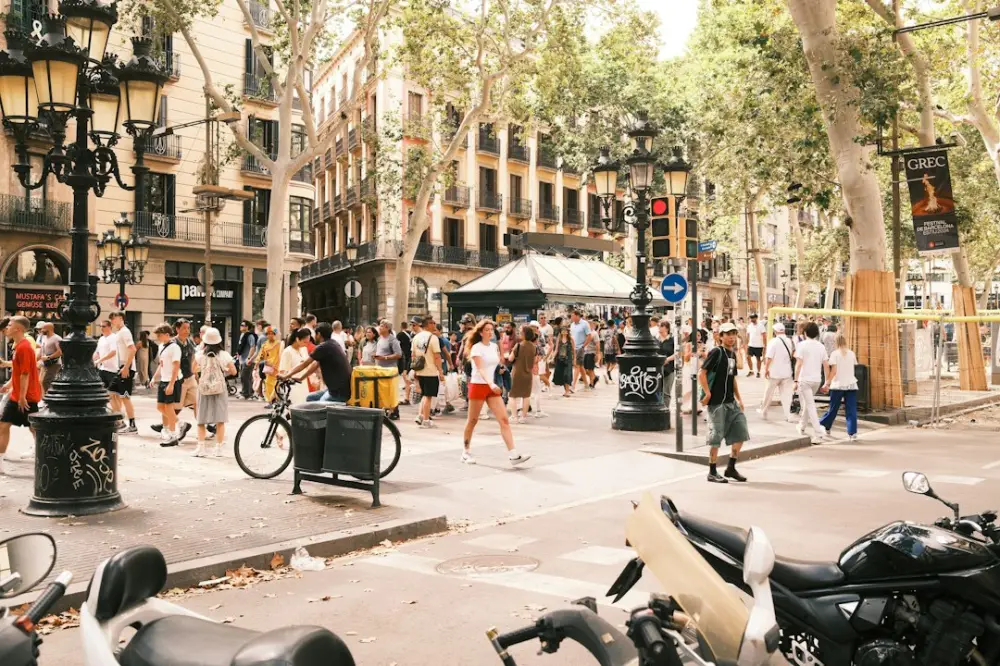
Exploring neighborhoods in Barcelona today requires a new set of tools. It demands a shift in perspective from the macro to the micro—from the grand facade of a cathedral to the way a local café’s seating arrangement encourages a conversation between strangers. As we navigate the city in 2026, we find that the most profound stories aren't found in the guidebooks, but in the interstitial spaces: the narrow alleys of the Gòtic, the industrial-turned-creative hubs of Poblenou, and the vibrant, community-led squares of Gràcia. This cluster exploration is designed to help you transition from a passive tourist to an active urban observer, providing the context needed to see the street as a complex, interconnected ecosystem.
The Art of the Urban Stroll: Seeing Beyond the Facade
For decades, the architectural tour was a predictable affair—a sequence of stops in front of landmarks, a checklist of dates and styles delivered through a crackling headset. But a quiet revolution is happening on the pavement. We are witnessing a moment where architectural walking tours are finally changing the way we perceive our surroundings. In 2026, the focus has shifted from the 'monument' to the 'movement.' We are no longer just looking at buildings; we are learning how to see the street as a connective tissue.
The Contextual Revolution
Traditional narratives often treated buildings as isolated objects, floating in a vacuum of aesthetic merit. Today’s editorial-style walking tours reject this isolation. They treat the street as a living laboratory, analyzing how a building’s shadow affects a local microclimate or how the placement of a doorway influences the flow of foot traffic. This contextual approach is changing the way residents and tourists alike perceive their environment. When we stop looking at a building as a finished product and start seeing it as a participant in the street's life, the city opens up in entirely new ways.
The Walking Tour as Urban Activism
In Barcelona, these tours have evolved into a form of urban activism. Guides now highlight the adaptive reuse of old industrial warehouses—not just as 'cool' lofts, but as essential infrastructure for local creative economies. By understanding the 'how' and 'why' of urban planning, pedestrians become stakeholders in the city's future. This shift reflects a broader cultural change in how we consume urban space. In an era of 'slow travel,' the modern observer wants to understand the gaps between the monuments where life actually happens.
The Third Space: How Neighborhood Coffee Shops Anchor the Street
Walk down any revitalized corridor in Barcelona in 2026, and the sensory experience is almost always anchored by a familiar scent: roasted beans and steamed milk. However, to view the modern café as merely a site of caffeine consumption is to miss the profound architectural and social shift occurring right outside its doors. We have reached a point where coffee shop culture is actually reshaping the very fabric of our streets, acting as the primary architect of the contemporary urban experience.
The Concept of Permeability
Modern urban design now prioritizes 'permeability'—the idea that the boundary between a building and the street should be fluid. Coffee shops lead this charge with floor-to-ceiling glass, folding garage-style doors, and expansive sidewalk seating. By blurring the line between the interior and the exterior, these spaces extend the living room of the private home into the public sphere. In neighborhoods like Sant Antoni, the café has become the 'front porch' of the city, a semi-public threshold that mediates the relationship between the individual and the collective.
The Café as a Community Anchor
Sociologist Ray Oldenburg famously coined the term 'The Third Space' to describe environments that are neither home nor work, but essential anchors of community life. In 2026, the coffee shop has become the definitive third space. It is where the digital nomad meets the local retiree, and where the 'interstitial' life of the neighborhood is most visible. These establishments are no longer peripheral amenities; they are vital organs that pump life into the street, providing a sense of safety, continuity, and social cohesion.
Voices of the Street: The Identity of Local Communities
Every city has its own rhythm, but it’s the local voices that shape its identity. From painted walls to spoken word performances in public squares, street culture is emerging as one of the most authentic ways communities express themselves. At the Barcelona Street Project, we have observed how local voices transform global cities: the rise of street culture is not just a trend, but a reclamation of the urban narrative by those who actually inhabit it.
Local Voices as Cultural Catalysts
Street culture begins at the grassroots level. It’s the local artists, musicians, and storytellers who infuse urban spaces with creativity, turning overlooked corners into cultural landmarks. In Barcelona, graffiti and murals carry community pride and resistance, particularly in areas facing the pressures of gentrification. These micro-expressions of identity resonate far beyond their origins, often sparking global recognition. When we move creative expression out of galleries and onto the pavement, creativity belongs to everyone.
The Power of Belonging
In an increasingly digital world, people long for authentic connection. Street culture provides a sense of belonging that cannot be replicated online. Whether it’s a block party in Nou Barris or a skate session at MACBA, these shared experiences create a collective memory. This cultural export isn’t manufactured—it’s organic, raw, and real. By listening to these local voices, we gain a deeper understanding of the city's soul, moving past the superficial layers of the 'global city' to find the heart of the neighborhood.
From Superblocks to Hidden Squares: The Evolution of Public Space
The physical structure of Barcelona is undergoing its most significant change since the Cerdà plan of the 19th century. The Superilles (Superblocks) program has moved from a controversial pilot project to a defining feature of the 2026 urban landscape. By reclaiming asphalt from cars and returning it to pedestrians, the city has created a new kind of public space that prioritizes human interaction over vehicular throughput.
The Psychology of the Pedestrianized Street
When you remove the noise and danger of constant traffic, the psychology of the street changes. People walk slower. They stop to look at shop windows. They sit on benches that aren't shouting distance from a tailpipe. This 'slow urbanism' allows for the growth of micro-communities. In the Eixample, the intersections that were once mere transit points have become 'plazas' where children play and neighbors meet. This evolution of public space is a direct response to the need for more livable, breathable urban environments.
Hidden Squares and Interstitial Gaps
While the Superblocks represent a planned evolution, Barcelona is also defined by its unplanned, hidden squares. These are the 'gaps' in the urban fabric—the small clearings in the dense woods of the Old Town. Places like Plaça de Sant Felip Neri or the tiny courtyards of El Born offer a different kind of urban experience. They are sites of quiet reflection and historical layering, where the scars of the past meet the energy of the present. Understanding these spaces requires a patient eye and a willingness to get lost.
Mapping the Micro-Cultures of Barcelona’s Diverse Districts
To truly explore Barcelona's neighborhoods, one must recognize that the city is a federation of distinct micro-cultures. Each district has its own 'street language,' its own architectural vernacular, and its own social rules. In 2026, these distinctions are more celebrated than ever, as neighborhoods strive to maintain their unique identities in a globalized world.
- Gràcia: The Village Within the City. Known for its low-rise buildings and interconnected squares, Gràcia maintains a 'village' feel. Here, the street culture is defined by local festivals (Festes Majors) and a fierce sense of independence. The movement here is circular, revolving around the plazas that act as the neighborhood's lungs.
- Poblenou: The Industrial Palimpsest. Once the 'Manchester of Catalonia,' Poblenou is now a hub for technology and design. The street culture here is one of adaptive reuse—old factories becoming art galleries and tech hubs. The streets are wider, the light is different, and the vibe is one of constant experimentation.
- El Raval: The Multicultural Layer. Raval is perhaps the most complex neighborhood in Barcelona. Its street culture is a dense tapestry of immigrant voices, historic architecture, and cutting-edge art. It is a place of friction and fusion, where the 'local voice' is a polyglot chorus.
- Sants: The Radical Tradition. Sants has a long history of labor movements and cooperative living. This is reflected in its street life, which is dominated by community-run spaces and a strong sense of neighborhood solidarity.
The Barcelona Street Project: A New Lens for the City
The Barcelona Street Project was founded on the belief that the street is the most important cultural venue in any city. Our mission in 2026 remains the same: to document the evolution of urban life and to provide a platform for the voices that define it. We believe that by understanding the sociology of the street—the way we walk, the way we drink coffee, and the way we express ourselves in public—we can build better, more inclusive cities.
As you explore the neighborhoods of Barcelona, we encourage you to look beyond the surface. Don't just take a photo of a building; look at how people are using the space around it. Don't just buy a coffee; notice how the café interacts with the sidewalk. Listen to the music coming from a second-story window or the rhythm of a local market. These are the signals of a healthy, vibrant urban culture. By engaging with the city as an active observer, you become part of its story.
Essential Reading for the Urban Observer
To dive deeper into the themes discussed in this guide, explore our detailed posts on the specific forces shaping Barcelona's streets today:
- The Evolution of Sight: Discover how architectural walking tours are finally changing our relationship with the built environment, moving from facade-watching to deep sociological immersion.
- The Social Fabric: Learn why coffee shop culture is actually reshaping the physical and social boundaries of the modern streetscape.
- The Grassroots Narrative: Explore the ways in which local voices transform global cities: the rise of street culture as a force for authenticity and belonging.
The journey through Barcelona's neighborhoods is an ongoing process of discovery. Whether you are walking through the sunlight-dappled Superblocks of the Eixample or the gritty, energetic alleys of the Raval, remember that the street is a conversation. We invite you to join that conversation, to contribute your own observations, and to help us document the ever-changing life of the Barcelona street.